
Choose the next step
An unwanted crack and a designed air opening can both admit outdoor air. Their purpose differs. VentilationExchange of indoor and outdoor air to serve the home's air needs.
Example: A designed outdoor-air system differs from an accidental crack. is the planned exchange of indoor and outdoor air. Combustion airAir required by fuel-burning equipment for combustion.
Example: The identified utility intake must remain unobstructed. supports fuel-burning equipment. A return grille moves air within a heating or cooling system.
Window drainage openings allow water to leave a manufactured assembly. You must identify an opening before deciding whether to seal it.
A label, equipment manual or qualified assessor can resolve an uncertain purpose. Do not cover an opening just because you feel air near it. For an unidentified opening, the correct beginner action is to record it and ask, rather than improvise a plug.
Supplied case
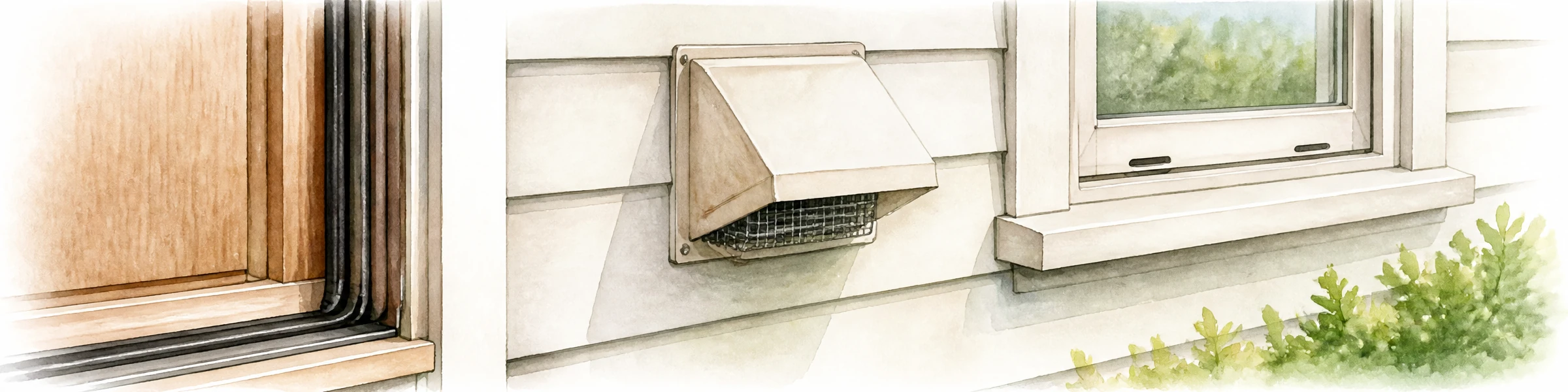
Three observations are supplied: a torn door gasket, a labelled outdoor-air intake and a small unidentified opening in a window frame.
Classify each as investigate for repair, preserve or identify before action.
Attempt first, then compare the worked response
Investigate the torn gasket for replacement. Preserve the outdoor-air intake. Identify the window opening before any sealing.
The gasket has a known sealing function. The intake has a known air-supply function. The window opening could serve drainage or another design function.
Check your response: Do not put an intentional or unidentified opening on a seal-now list.
Concept reference: U.S. Department of Energy, Consumer Guide to Home Ventilation.