
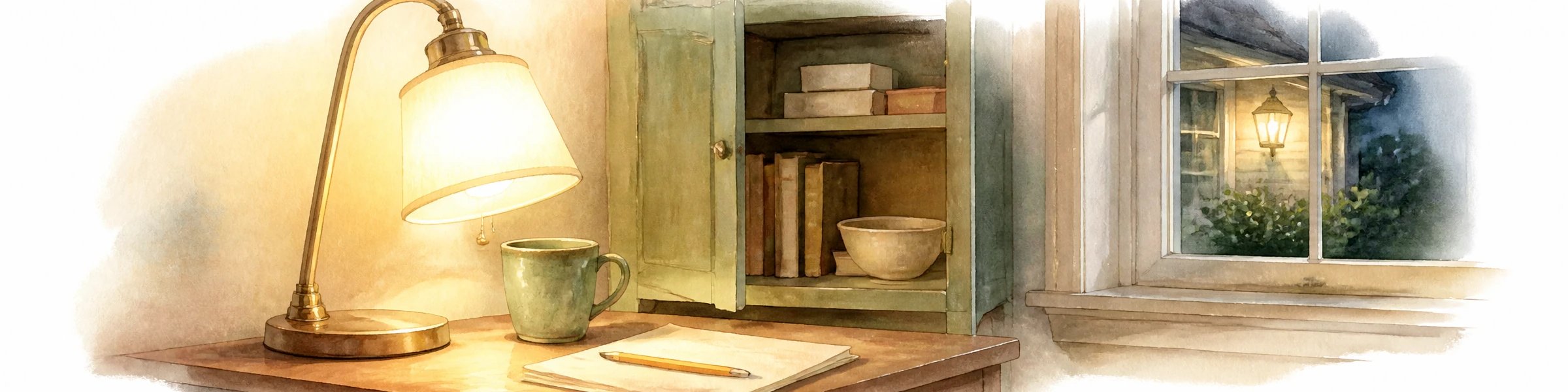
The household task
A first win combines a meaningful visual need with enough operating time to matter. Count bulbs as well as hours: three bulbs operating together use three times the energy of one identical bulb for the same duration.
Do not rank by wattage alone. A high-power light used briefly may consume less annual energy than a lower-power light used all evening.
Safety concerns take priority over savings, and already satisfactory low-use lighting may be a later project. For now, use estimated hours as a screening input. Later lessons show how estimates become kilowatt-hours and why they remain uncertain.
Try the supplied case
The reading lamp uses one 60 W incandescent for 3 hours/day and has a comfort problem. A cupboard has one 40 W bulb for 5 minutes/day. An already satisfactory LEDLight-emitting diode, a semiconductor light source used in lighting products.
Example: Cedar’s selected LED card states 800 lumens and 9 W. porch light uses 8 W for 2 hours/day.
Rank one first purchase and explain why the highest wattage alone is not the complete rule.
One defensible response
Start with the reading lamp: it combines a daily three-hour use with a specific comfort problem. The cupboard runs only about one-twelfth of an hour daily; the porch already has an LED and no identified defect.
Hours and the existing lamp type change the opportunity. This comparison does not claim an exact saving or that every incandescent must be replaced immediately.
Check your response: Mention both task quality and operating hours in the first-place explanation.